Buying New Construction in Longs, SC? Check Septic & Zoning
August 20, 2026
August 20, 2026
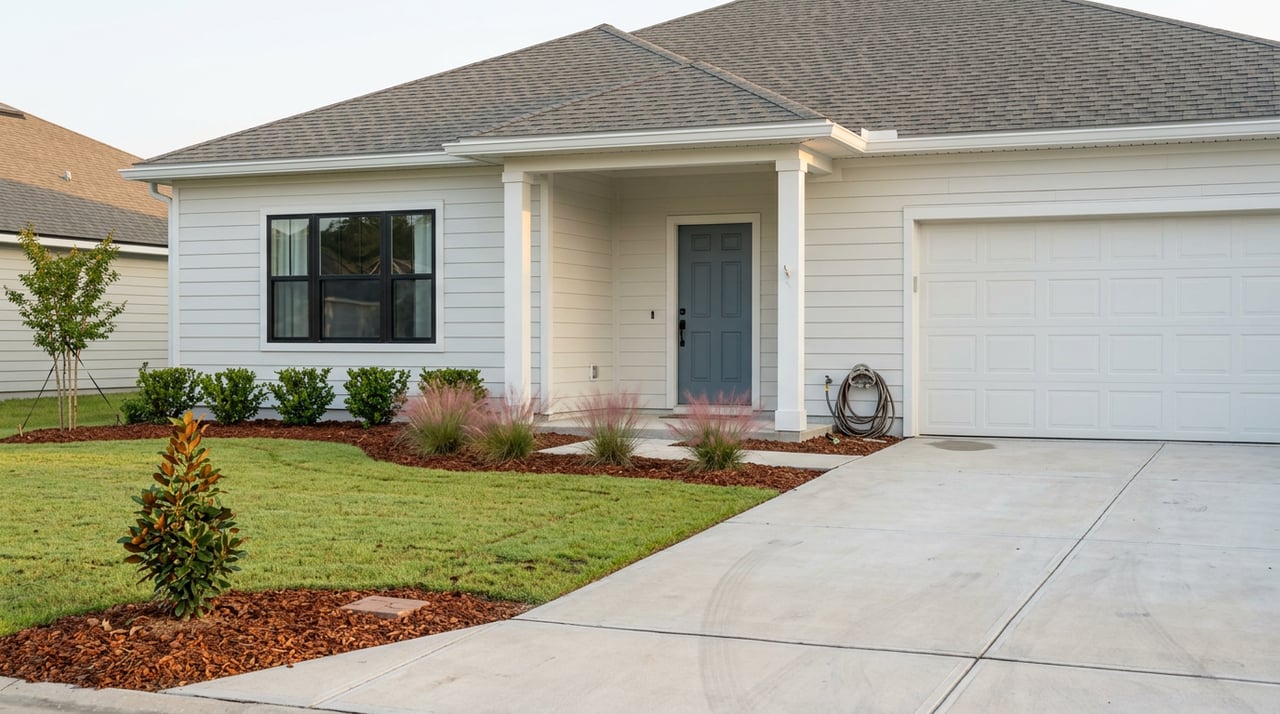
Walk into a sales office along Highway 9 in Longs and the pitch is the same one every builder makes everywhere: granite that's never seen a coffee ring, a ten-year structural warranty, a home nobody has lived in yet. The unspoken promise underneath all of it is that new means clean. No inherited problems, no mystery repairs, no fine print about what the last owner did or didn't fix.
That promise is mostly true. It is also the reason buyers in Longs skip the one step that matters most here.
South Carolina's Residential Property Condition Disclosure Act requires a seller to tell a buyer, in writing, about the water supply and sewage disposal system on a property. It is one of the first things the law asks a seller to put in writing. New construction is exempt from that requirement. So the paperwork trail that would normally tell you whether a home sits on public water or a septic tank, and whether that septic system has ever had a problem, simply does not exist for the home going up right now on a cleared lot off SC 9. Nobody is required to hand it to you. The builder's warranty covers workmanship and systems. It does not answer the question of what's actually under the yard, and in an area where a meaningful share of homes still run on private septic and well, that is not a small gap.
Grand Strand Water and Sewer Authority serves a large part of the Longs area, but not all of it. Parcels beyond GSWSA's lines run on a septic system and often a private well, and the only way to know which side of that line a specific lot falls on is to ask, either by calling GSWSA directly with the parcel number or checking the county's GIS records before you write an offer. It is not a detail the model home displays, and it is not always volunteered.
If the lot needs septic, South Carolina requires a site evaluation and a permit from the Department of Environmental Services before the foundation goes in. If the lot is above the state's "Fall Line," a soil evaluation using backhoe pits is required before the permit can be issued. Below the line, it isn't. Wells are permitted separately under a different regulation, and the septic system and well have to sit at least 50 feet apart, which means the two permits need to be coordinated together rather than treated as sequential errands.
None of this is disqualifying. It is normal for this part of Horry County. But it comes with real costs and real time, and both belong in a buyer's planning before they belong in a surprise at closing.
| Step | What It Covers | Typical Cost | Typical Timeline |
|---|---|---|---|
| SCDES septic permit | Site evaluation and Permit to Construct | Around $150 permit fee | Part of a 4 to 8 week review |
| Conventional septic install | Standard gravity-fed system | $5,000 to $15,000, more for engineered systems | 2 to 10 days once permitted |
| Engineered septic system | Required when soil or site conditions demand it | $3,000 to $8,000 in engineering costs, plus $15,000 to $30,000 or more for installation | 2 to 4 weeks longer than a standard permit |
| Well drilling | Private well construction under state regulation | Several thousand dollars, driven mostly by depth | Scheduled separately from the septic permit |
| Full septic process, start to finish | Site evaluation through final SCDES inspection | Included in cost above | 6 to 12 weeks, longer in high-growth corridors where installers are backed up |
The last line matters more in Longs than it would somewhere with less building activity. Contractor backlogs in fast-growing Grand Strand areas can stretch a timeline that looks straightforward on paper into something that runs past a builder's projected closing date.
Longs is unincorporated. There is no town hall, no local zoning board, no municipal ordinance layer sitting on top of anything. Horry County's zoning applies directly, everywhere in the community, and that single fact changes what you can build and where more than most buyers expect.
Horry County uses single-family districts like SF6, SF7, and SF10, along with manufactured-friendly districts like MSF6, MSF7, and MSF10. In an MSF10 district, both a site-built home and a manufactured home are allowed on a lot of at least 10,000 square feet. But most of the newer platted subdivisions in Longs, the golf communities and master-planned neighborhoods with sidewalks and a shared architectural style, are zoned as standard SF districts that exclude manufactured homes entirely. Modular construction is a different category. Because modular homes are built to the same state building code as site-built homes, they're permitted on any residentially zoned lot, including SF subdivisions where a manufactured home would not be allowed.
If your plan involves anything beyond a standard stick-built home from a national builder, an accessory dwelling, a manufactured home on family land, a future workshop or guest structure, this is the question to ask before you fall in love with a lot: what district is this parcel actually zoned, and what does that district permit. Horry County Planning and Zoning can confirm it directly at 843-915-5340, and it is a five-minute call that can save a much longer conversation later.
Much of the Longs area falls inside a USDA Rural Development eligible zone, which opens the door to zero-down financing for qualified buyers on a home built on a permanent foundation. This is not a marketing gimmick. As one example, a $209,900 land-home package can run roughly $1,650 to $1,750 a month at mid-2026 rates once estimated taxes and insurance are factored in, a payment that lands close to what a renter in the same corridor is already paying. For a first-time buyer weighing a rental off Highway 9 against a purchase, that comparison is worth running with an actual lender before assuming either option is the obvious one.
USDA eligibility and manufactured-home zoning intersect in a way worth flagging. A manufactured home has to be set by a South Carolina-licensed installer and meet HUD Wind Zone II standards, and Horry County adds its own layer on top: a mobile home setup permit, a county impact fee, a moving permit and tax sticker through the Assessor, and proof of either sewer service or SCDES septic approval before the home can be set. It is a longer checklist than a standard stick-built closing, and it is worth knowing before you fall for a land-and-home price that looks better than everything else on the market.
What GSWSA service line does this parcel sit on, if any, and is that in writing from the utility, not just the builder's sales sheet?
What zoning district covers this lot, and does that district's classification match what I actually plan to build?
If the lot needs septic, has a site evaluation been completed, and what soil conditions did it turn up?
Is this specific USDA-eligible, and has a lender actually confirmed that for this address, not just the general area?
These are ordinary questions anywhere in the country. They carry more weight in Longs because the standard safety net, the seller disclosure form that would normally answer most of them, doesn't apply to a home that's never had an owner.
Drive the Highway 9 corridor through Longs today and the builder names repeat themselves: D.R. Horton at Carrington Woods and Evington Place, Great Southern Homes at Oak Hollow and Avery Woods, communities like Bluffs at Sun Colony, Tupelo Park, Indigo Grove, Cypress Ridge, and Heritage Park filling in what used to be farmland between the coast and Conway. Some of these sit inside GSWSA's service lines. Some don't. Some are zoned in a way that would let a family add a manufactured guest cottage down the road, and some aren't. The only way to know which is which, lot by lot, is to ask before you're under contract, not after.
That is the actual story of buying new construction in Longs. It isn't that the area is risky or that builders are cutting corners. It's that the newest home on the street is, by design, the one with the least paper trail behind it, and the buyer who assumes new means nothing to check is the one who finds out about the septic line or the zoning district on the day it becomes a problem instead of the week it would have been a simple phone call.
Does Longs have its own zoning department? No. Longs is unincorporated, so Horry County's zoning and Code Enforcement offices handle everything, with no separate town government layered on top.
Is every home in Longs on public water and sewer? No. Grand Strand Water and Sewer Authority covers a large part of the area, but plenty of parcels, especially further from Highway 9, rely on a private septic system and well.
If a builder doesn't have to disclose the septic system, how do I find out about it? You request the site evaluation and permit records directly, and you order your own septic and well inspection before closing rather than relying on paperwork that isn't legally required in a new-construction sale.
If you're comparing a lot in Longs against something closer to the coast, or you just want a second set of eyes on a builder contract before you sign, Carrie Gerald has spent years walking Grand Strand buyers through exactly these details, lot by lot. Reach out before you write the offer, not after.
Stay up to date on the latest real estate trends.

Make your next move with the confidence of decades of local insight. We focus on clear communication and reliable representation from start to finish.